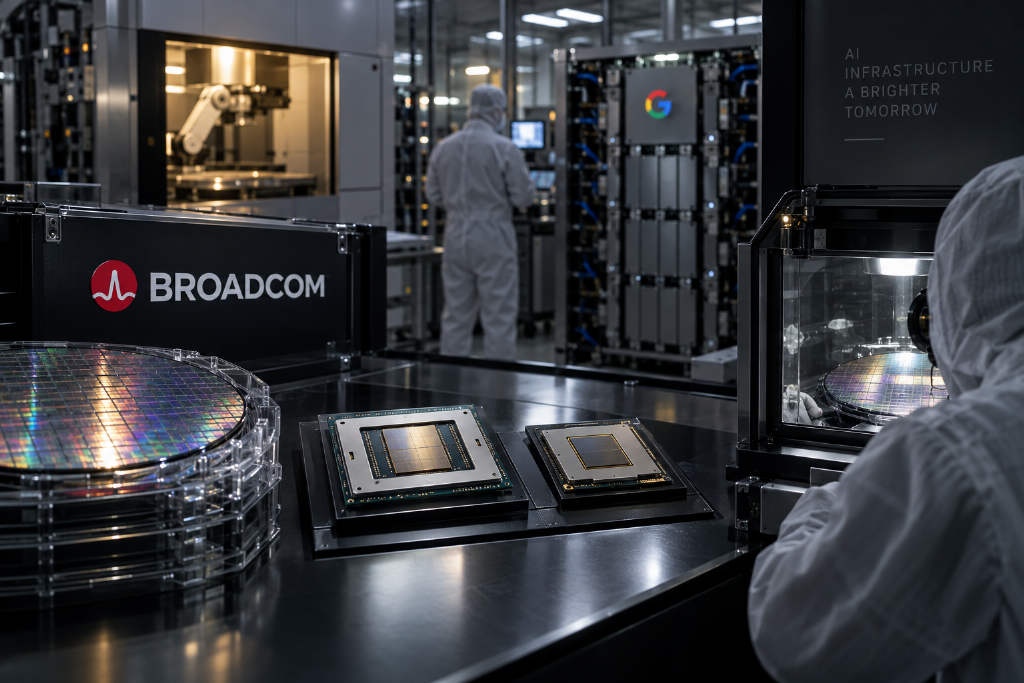
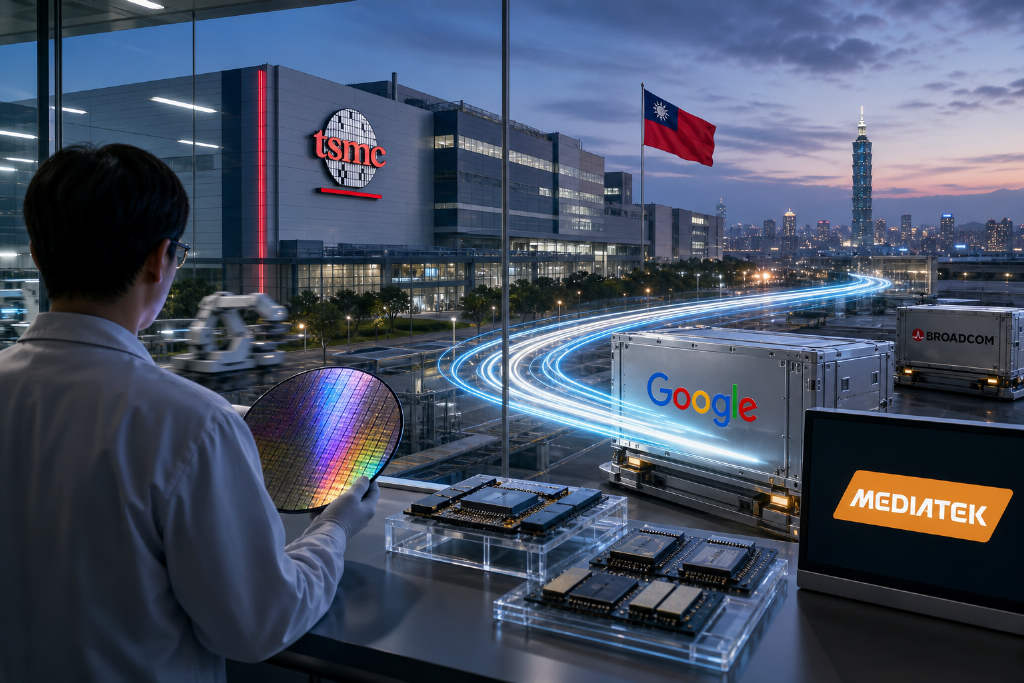
Broadcom2026-10-06 03:59:02UBS says Broadcom remains deeply involved in Google TPU v9 and v10UBS said its latest supply-chain checks point to Broadcom staying closely involved in Google’s TPU roadmap beyond v8i, pushing back on market talk that MediaTek or other suppliers had taken over a larger share after v8. According to the report, Broadcom is still part of the TPU v9 program, which UBS expects to ramp at the end of 2027 and account for most shipments in 2028, and is also involved in the 2 nm-based v10 generation, which the bank expects to start shipping at the end of 2028. UBS said investor concern had grown because supply-chain sources did not show 2 nm wafer allocations for Broadcom, leading some to worry that the company’s N2 plan had been canceled. The bank said that reading was based on a misunderstanding of the roadmap, arguing that v9 remains on a 3 nm path while the move to 2 nm comes with v10. UBS also said Broadcom’s N2 plan has not been canceled. The bank added that its findings come from channel checks in a research report rather than official disclosures from Google or Broadcom, and said final market share and shipment volumes remain uncertain. UBS also expects TSMC’s CoWoS to continue accounting for about 75% of Broadcom’s demand before the v10 generation, even as Broadcom expands packaging capacity through AST’s new FC-BGA facility in Singapore.170
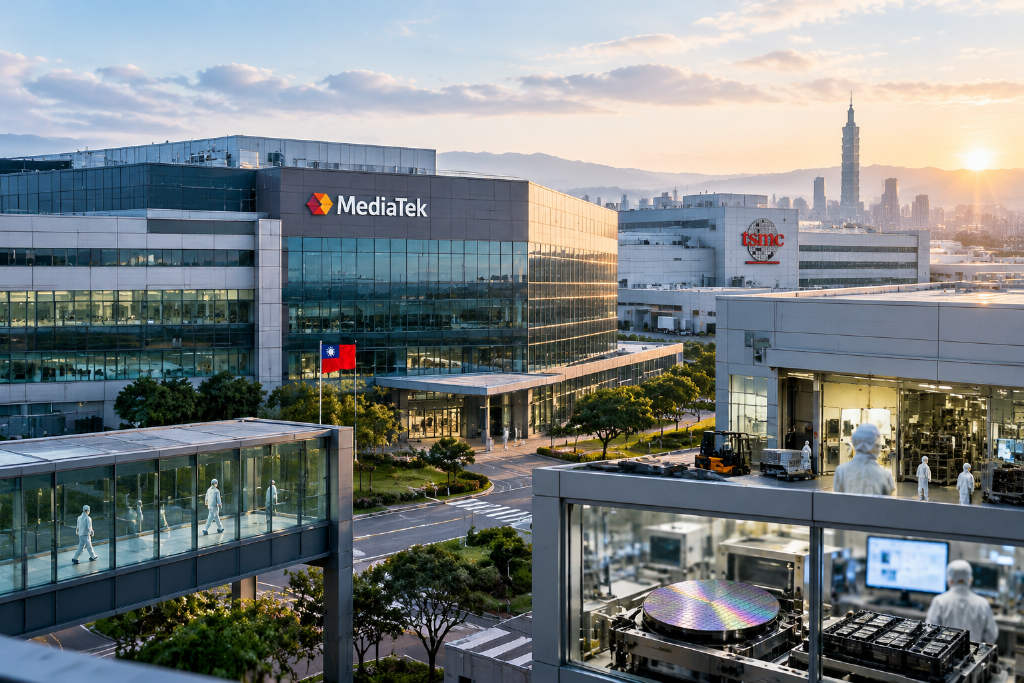
MediaTek2026-09-30 03:52:08MediaTek rebounds 3% as institutions back TSMC packaging support and keep NT$7,300 targetMediaTek shares rebounded 3% on Sept. 30 after dropping nearly 7% a day earlier, as institutional investors maintained a bullish stance and cited Taiwan Semiconductor Manufacturing Co. support on advanced packaging as a key offset to market concerns. According to ABMedia, the sell-off on Sept. 29 was driven by a wave of market rumors tied to MediaTek’s Google TPU program, including claims of repeated tape-out failures, chip performance falling short of Google’s requirements, the absence of 448G SerDes IP authorization, longer debugging cycles for multi-die voltage issues, and low yield rates for Intel’s EMIB advanced packaging substrate. MediaTek rejected those claims as false rumors and said its ASIC business remains on schedule. The company said its first AI accelerator ASIC is expected to enter mass production in the fourth quarter of this year, while data center-related revenue is targeted to exceed $2 billion this year, with stronger growth expected next year. The report also noted that MediaTek completed a $3.9 billion overseas convertible bond issuance last month, with NVIDIA subscribing $3.5 billion and Google also participating. Institutional commentary cited in the report said TSMC has stepped in with CoWoS-L as a second packaging source for Google’s 2nm TPUv9, code-named Humufish, which is expected to ramp in 2028. TSMC is expected to support about 500,000 units, while Intel EMIB-T would provide about 2.5 million, bringing total capacity close to MediaTek’s annual shipment target of 3 million units.940
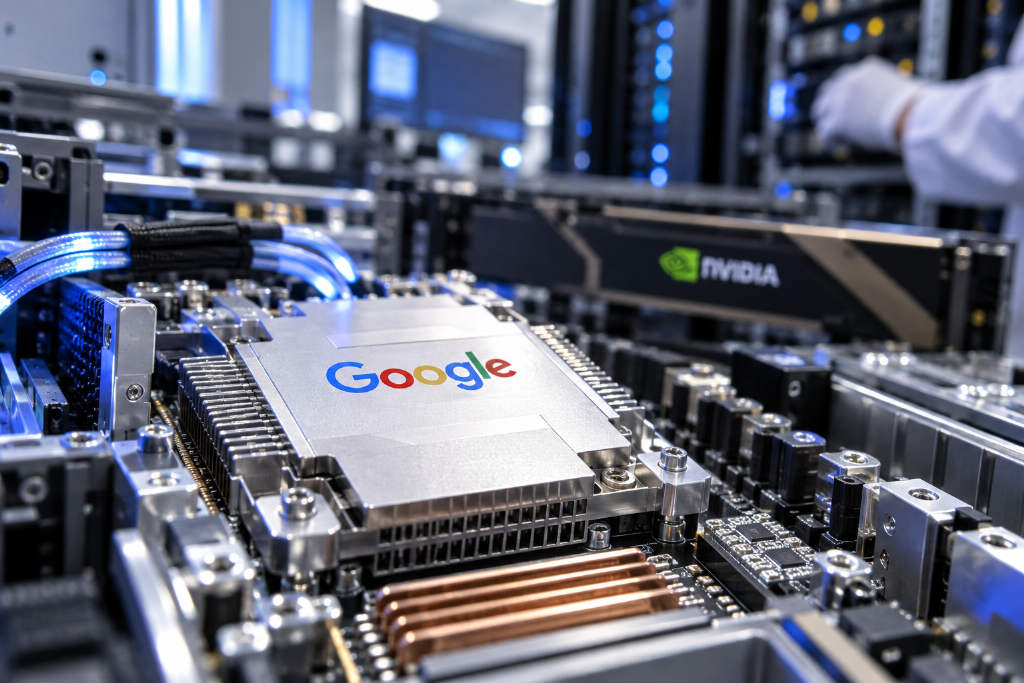
Google TPU2026-09-26 07:27:35Google TPU runs Kimi inference 57% faster than Nvidia GPUTechub News reported that Google’s Tensor Processing Unit, or TPU, delivered inference for Moonshot AI’s Kimi large language model at a speed 57% higher than Nvidia GPUs. The test was conducted on the DeepSeek inference framework, according to the brief. The item cited QbitAI as the source of the information. No additional benchmark details, hardware model information, or testing conditions were disclosed in the digest. The report focused on the comparison result itself and the framework used in the test environment. As presented, the claim concerns inference performance for Kimi rather than training performance or broader workload comparisons across other models. The source note identifies the story as a Techub News item under the technology category.380
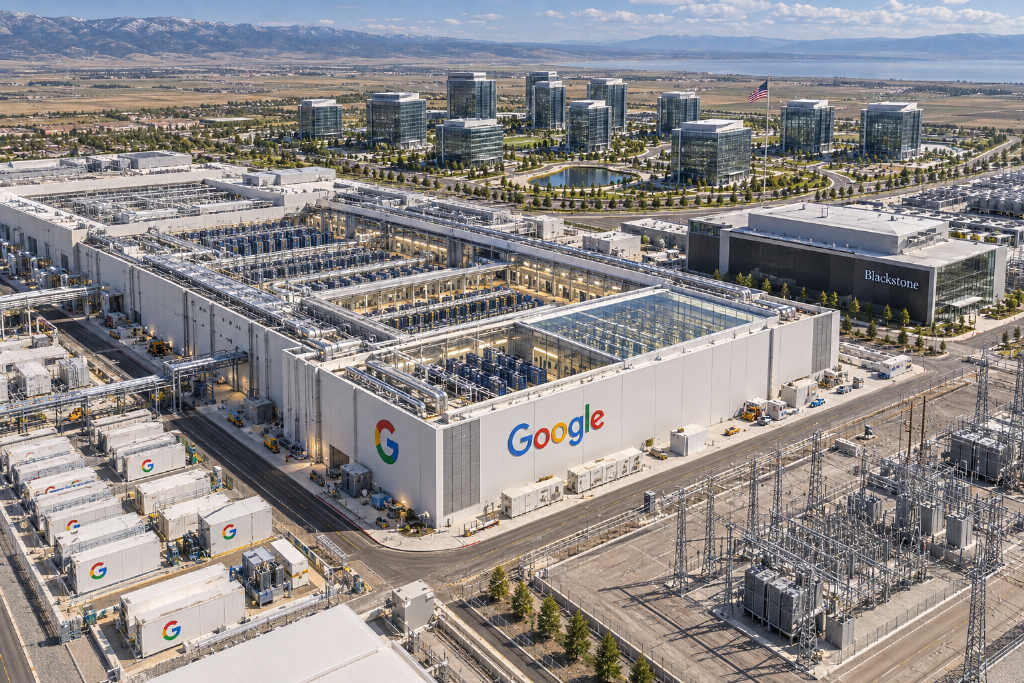
Crux AI2026-09-20 10:10:38Crux AI secures $22 billion chip-backed loan to buy Google TPUsA consortium of 10 banks has extended a $22 billion chip-backed loan to Crux AI, according to Dealroom.co, citing Bloomberg News. The financing will be used to purchase custom Tensor Processing Units, or TPUs, from Google. Crux AI is the artificial intelligence cloud joint venture announced in May by Blackstone and Alphabet, and the project officially launched last week. In addition to the debt package, Crux AI has already received a $5 billion equity investment from Blackstone. Google is supplying the TPUs, along with software and services tied to the buildout. The project is targeting its first 500 megawatts of capacity in 2027. Named lenders in the banking group include Goldman Sachs, Sumitomo Mitsui Banking Corporation, Barclays, BNP Paribas, and Scotiabank. The report outlines both the scale of the financing and the structure behind one of the larger AI infrastructure buildouts now moving ahead.440
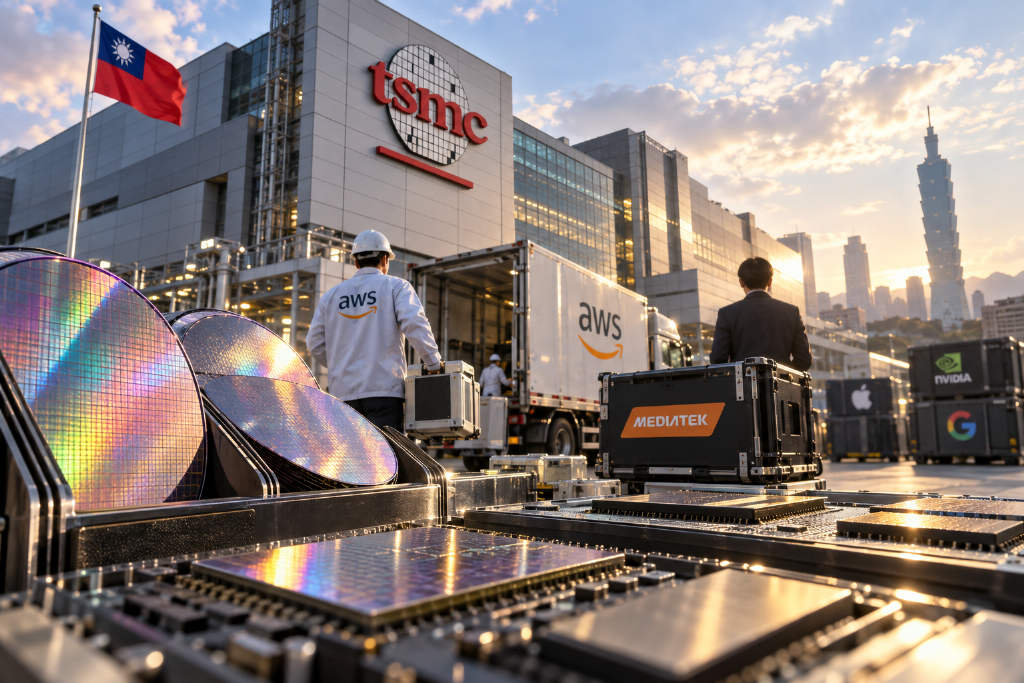
TSMC2026-09-15 01:02:49TSMC’s 3nm, 2nm and CoWoS capacity remains tight as AWS and MediaTek seek more allocationTSMC’s advanced manufacturing and packaging capacity remains under heavy strain in late Q3 2026, according to ChainCatcher. The report said 3nm, 2nm and CoWoS capacity continues to run short, with NVIDIA and Apple still taking up a large share of leading-edge process and packaging resources. Amazon Web Services, through its Annapurna chip unit, has recently increased tape-outs for its in-house AI chips and secured more 3nm capacity. MediaTek is also competing for 2nm, 3nm and CoWoS-S/L capacity, driven not only by smartphone chips but also by a major Google TPU order. Market chatter points to a recent reshuffle in TSMC’s capacity allocation. After winning the Google TPU order, MediaTek is said to have slightly adjusted its 3nm and 2nm plans, while the next-generation TPU v9 is expected to use both TSMC’s CoWoS-L and Intel’s EMIB-T. The report added that TSMC accelerated expansion from early 2026, with combined 2nm monthly capacity at Fab 20 and Fab 22 reaching about 100,000 wafers by the end of October, while 3nm monthly capacity in Southern Taiwan is around 185,000 wafers. Overall utilization stood at about 96.2% by the end of September.1320
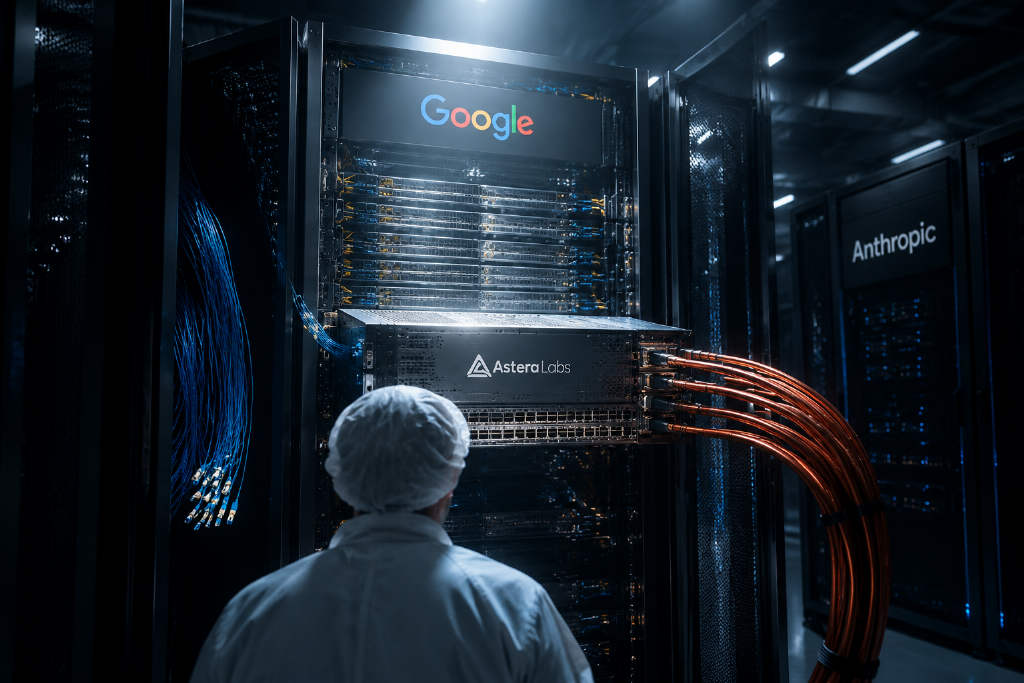
Anthropic2026-09-14 05:12:37Report says Anthropic wants Google to replace optical switching in next TPU with an all-electrical designIndustry chatter suggests Anthropic is pressing Google to change the interconnect design for its custom version of the next-generation TPUv9i chip, codenamed Triggerfish. The reported request would drop Google’s long-used optical circuit switching, or OCS, in favor of a full electrical switching architecture built around an upgraded Astera Labs Scorpio-X switch. According to the report, Google’s current TPU clusters use a 6D-Torus topology for inter-chip interconnects and pair that with dynamic optical circuit switching, allowing TPU Pods to reconfigure near all-to-all optical paths. That setup has been viewed as one of the clearest ways Google TPU differs from NVIDIA GPUs and AWS Trainium, and the article says Google is the only major AI accelerator platform using OCS today. The rumored alternative centers on a higher-spec Scorpio-X with 320-radix and SerDes speeds rising from 128G to 336G, a roughly 2.6x increase. The report also says Anthropic may see benefits in freeing die area by offloading routing functions, while simplifying operations across Google TPU, AWS Trainium, and NVIDIA GPU deployments through a more uniform interconnect fabric. If the shift happens, optical interconnect suppliers including Ayar Labs could face pressure, while Astera Labs could strengthen its standing in hyperscale AI cluster interconnects. The report notes that the claims remain unconfirmed.1250
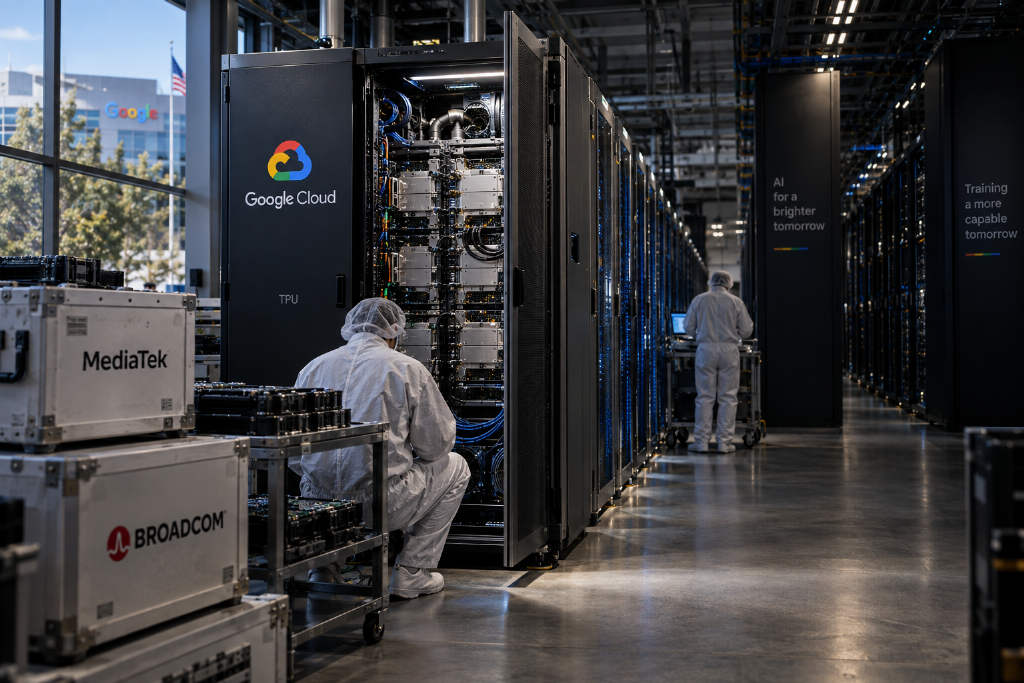
Google TPU2026-09-14 03:47:56Google Says TPU Pays Back in About a Year as MediaTek Expands Supply Role and Broadcom Holds Training OrdersGoogle Cloud CEO Thomas Kurian said Google’s in-house Tensor Processing Units, or TPUs, can recoup their investment in about one year, while the overall payback period for Google AI servers is under two years. That disclosure has pushed investor attention toward the supply chain, where industry sources say TPU demand is still rising. According to the report, Google Cloud’s AI infrastructure customer base now stretches beyond AI labs into financial services, capital markets, high-performance computing, public-sector organizations and research institutions. Named examples include hedge funds, Deutsche Börse and the U.S. government’s Genesis Mission energy project. As workloads diversify, Google is said to be launching more TPU programs tailored to different computing needs. Third-party research from SemiAnalysis compared Google’s seventh-generation TPU v7 Ironwood with Nvidia’s B200 and B300 in FP8 inference. In one test setting, Ironwood posted a lower cost per million tokens than both Nvidia chips. Still, SemiAnalysis said results vary significantly depending on development maturity and latency requirements, and noted that Nvidia remains ahead in FP4 because Ironwood lacks native FP4 support. On the supply side, MediaTek has been increasing its share, while Broadcom continues to hold major training-side TPU orders.1150
MediaTek2026-09-01 04:10:02J.P. Morgan says Google TPU orders are tilting toward MediaTek, putting Broadcom share at riskJ.P. Morgan’s latest industry survey points to a sharper shift inside Google’s TPU supply chain, with MediaTek gaining ground against Broadcom in the current TPUv8 generation and potentially extending that lead into TPUv9. The bank said MediaTek’s TPUv8t Zebrafish ASIC has moved smoothly into mass production with Taiwan Semiconductor Manufacturing Co. (TSMC), using the N3 process node and CoWoS advanced packaging. On that basis, J.P. Morgan estimates MediaTek’s data center ASIC revenue could exceed $2 billion in 2026. The bank also expects Zebrafish unit shipments to top Broadcom’s Sunfish in 2027, which it said could lift MediaTek’s full-year data center ASIC revenue to $18 billion, above the company’s own $12 billion to $16 billion guidance range. A major factor in that view is cost. According to the survey, Google could save about 43% per chip by shifting purchases from Broadcom’s fully integrated design approach to MediaTek’s semi-CoT modular packaging model. J.P. Morgan added that it sees no sign Broadcom has a TPUv9 competitive product, reportedly codenamed Pumafish, for 2028. Separately, MediaTek on Aug. 31 announced a $3.9 billion unsecured overseas convertible bond deal, with NVIDIA taking $3.5 billion and Alphabet subscribing to the remainder.1320